
How Cosmetic Dentistry Impacts Your Oral Health Beyond Aesthetics
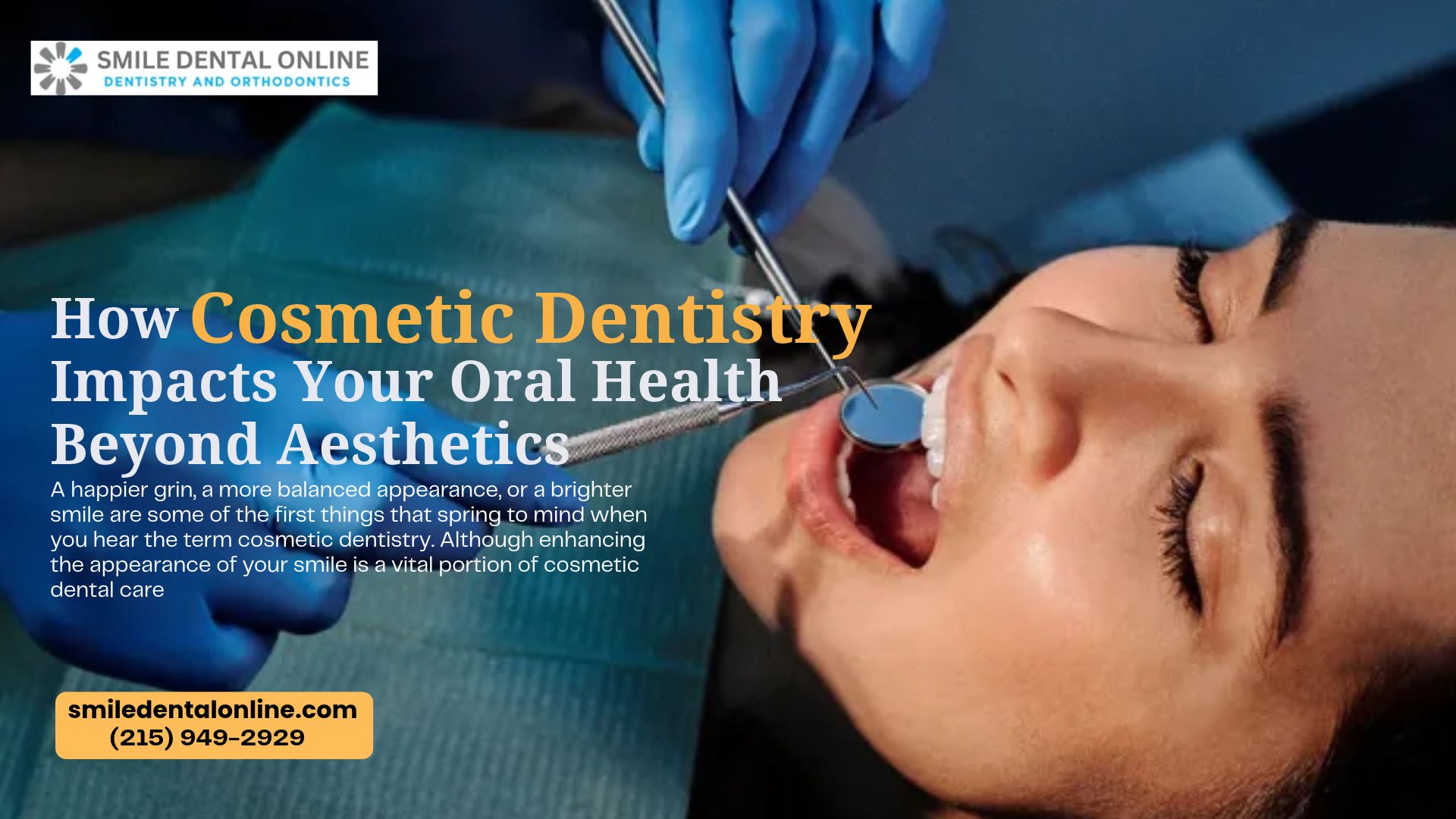
A happier grin, a more balanced appearance, or a brighter smile are some of the first things that spring to mind when you hear the term cosmetic dentistry. Although enhancing the appearance of your smile is a vital portion of cosmetic dental care, a few treatments can also address features involving functionality or even form part of a comprehensive program to maintain your oral health.
There’s more to a healthy smile than looks. Your teeth, gums, bite and oral hygiene will impact, over time, the ease of eating, speaking, cleaning your teeth and keeping your smile. This is the reason that cosmetic dent
Cosmetic dentistry Smile Dental Online may consist of teeth whitening, dental veneers, Invisalign, and same-day crowns. Everyone’s dental objectives and oral condition will dictate which treatment is suitable for them.
What Does Cosmetic Dentistry Have to Do with Oral Health?
The main area of cosmetic dentistry involves enhancing smiles and teeth. Some cosmetic procedures, however, can fall into the realms of restorative or functional dentistry.
For example, a dental crown may improve the form and function of a fractured tooth in addition to its appearance. With Invisalign, patients can make some areas easier to brush and floss while improving the alignment of their teeth. While veneers may alter the look of some teeth, they are not a first-choice option to be used unless the underlying dental issue has been treated.
So, it is not necessary to use a cosmetic treatment in place of preventive dental treatment. Regular dental appointments, professional cleanings, fluoride toothpaste and daily interdental cleanings are still necessary for healthy teeth. We support our patients in keeping up these daily habits and coming back regularly to our office for dental care to help keep their smile healthy.
1. Teeth Whitening Can Encourage Better Smile Care
One of the most sought-after cosmetic dental procedures is teeth whitening. It can help to minimize discoloration and can help to enhance the brightness of natural teeth.
However, it’s not just about picking the best whitening product that you can get your hands on. A dentist must first determine whether teeth whitening is appropriate and determine the origin of the discolouration.
Hydrogen peroxide or carbamide peroxide is usually used during professional whitening. More common side effects of whitening include temporary sensitivity of teeth and gum irritation. The ADA further reports that whitening does not affect the colour of tooth-colored restorations like crowns, veneers or fillings.
Therefore, teeth whitening may be advantageous for people considering it as a prior treatment. It allows the dentist the chance to discover any problems, such as decay, gum disease, tooth sensitivity or current restorations, that may impact the outcome.
After that, it’s crucial to keep up a happier smile with regular routines. Brushing regularly, cleaning between teeth, visiting the dentist regularly and being conscious of foods and drinks that can stain your teeth can all help keep your smile clean and healthy-looking
2. Dental Veneers Require a Healthy Foundation
Dental veneers are thin layers that are used to enhance the aesthetics of individual teeth. They can be used for problems with the shape of the teeth, their color, small irregularities or other cosmetic problems.
While veneers are mostly cosmetic, the health of the teeth below is important.
According to Smile Dental Online patient information, all dental problems must be resolved before veneers are fitted. Sometimes, some enamel must be removed, and the treatment is permanent.
A beautiful smile is built on healthy teeth and gums!
Tooth grinding or clenching, as well as one’s dental history, bite, and expectations for treatment, should be discussed between a patient and his or her dentist before considering dental veneers. A thorough examination may be helpful to identify whether veneers are indicated or if another treatment might be more suitable to address the concern.
Oral hygiene is also a crucial part of the care of veneers. Although this veneer takes up a portion of a tooth, the remaining portion of the tooth and the gums require regular maintenance.
3. Invisalign Can Address Tooth Alignment
Oral hygiene is also a crucial part of the care of veneers. Although this veneer takes up a portion of a tooth, the remaining portion of the tooth and the gums require regular maintenance.
Following a customized treatment plan, the Invisalign procedure involves a series of transparent braces that gradually move the teeth over time. Patients may choose orthodontics because they want a straighter smile, but the placement of teeth may also affect how easy it is to clean certain regions.
Overlapping and jammed teeth can create certain areas that are harder to access with a toothbrush or dental floss. While some patients may find it easier to maintain their dental arches in an organized state if they are properly aligned, maintaining dental hygiene during the course of therapy is still necessary.
Clear aligner patients must also manage their daily habits. Teeth should be cleaned regularly before reinserting the aligners, and they must be cared for according to the dentist’s guidance.
The objective of a dental straightening procedure should not be just straight teeth. The successful treatment plan will include all of the following tooth movement, bite, periodontal health, hygiene and long-term retention.
4. Same-Day Crowns Can Restore Damaged Teeth
An example of this is the crown, which is a great way to integrate the two to work together in dentistry.
If there is a problem with the tooth, or if the tooth is weakened or damaged, a same-day crown may be needed to restore the structure, strength and function of the tooth. A crown can also be made to match the surrounding teeth, allowing both functional and cosmetic needs to be addressed.
You still need to practice good dental hygiene even if you have a crown. Clean regularly between the teeth and around the tooth and gums. A dentist can also monitor the condition of the restoration and other surrounding structures when performing regular dental check-ups.
A dental examination may be necessary to check if a crown or other treatment is indicated for a tooth that is structurally compromised, discolored or damaged.
Cosmetic Dentistry Can Support Confidence in Healthy Habits
Sometimes, aesthetic considerations can be a benefit to the patient and prompt them to pay more attention to their oral health.
A person who takes the effort to brush, floss, have professional cleanings, and visit the dentist regularly is more likely to continue doing so in the future.
Cosmetic treatment, however, should not be used as a substitute for prevention, however.
A smile that looks good does not necessarily provide good oral health. Cavities, gum disease, enamel difficulties, and other dental concerns can all be signs of poor oral health. On the other hand, an imperfect-looking tooth could very well be healthy.
It’s best to think about appearance and oral health in the same way.
Cosmetic Treatment Should Start with an Oral Health Evaluation
It is essential to know the condition of teeth and gums before undergoing cosmetic procedures.
A dental exam can help shed light on problems that need to be treated first, including:
- Tooth decay
- Gum disease
- Tooth sensitivity
- Cracked or damaged teeth
- Worn enamel
- Bite problems
- Existing dental restorations
- Tooth discoloration with an underlying cause
By addressing these concerns first, a healthier foundation for cosmetic treatment can be established.
For instance, when planning whitening, it is suggested that oral health and existing restorations be taken into account since whitening will affect different parts of the mouth than restorations.
Choosing the Right Cosmetic Dental Treatment
There is no single cosmetic procedure that is right for everyone.
If the strainer is primarily concerned about surface stains, he may consider whitening the teeth. If you have a specific cosmetic problem with the colour or shape of your teeth, veneers are a terrific alternative. It’s advisable to discuss this with your dentist. If you’re thinking about straightening your teeth, you might want to look into Invisalign. A structurally compromised tooth may need a restorative crown.
The best treatment for you will depend on the health of your teeth, gums, bite, expectations and long-term dental health goals.
Do not select a treatment from a picture or popular trends on social media instead, talk to a dentist who can assess your personal smile.
Schedule a Consultation
If you’re considering cosmetic dentistry, let our experts at Smile Dental Online guide you toward the best treatment options for both aesthetic and oral health benefits. Contact us today to schedule a consultation and take the first step toward a stronger, healthier, and more confident smile.
The main area of cosmetic dentistry involves enhancing smiles and teeth. Some cosmetic procedures, however, can fall into the realms of restorative or functional dentistry.
For example, a dental crown may improve the form and function of a fractured tooth in addition to its appearance. With Invisalign, patients can make some areas easier to brush and floss while improving the alignment of their teeth. While veneers may alter the look of some teeth, they are not a first-choice option to be used unless the underlying dental issue has been treated.
So, it is not necessary to use a cosmetic treatment in place of preventive dental treatment. Regular dental appointments, professional cleanings, fluoride toothpaste and daily interdental cleanings are still necessary for healthy teeth. We support our patients in keeping up these daily habits and coming back regularly to our office for dental care to help keep their smile healthy.